
Gluten-Free All-Purpose Flour Blend
Making your own Gluten Free All Purpose Flour Blend is easy, affordable and gives you a reliable flour to keep on hand for all of your gluten-free baking. This simple blend uses brown rice flour, tapioca starch and potato starch and comes together in about 5 minutes.
I’ve been using this homemade flour blend since I first started baking gluten free. After spending a lot of money trying different premade blends and getting inconsistent results, I started experimenting with my own. This combination became the flour I relied on for everything from cookies and muffins to cakes, breads and pie crust.
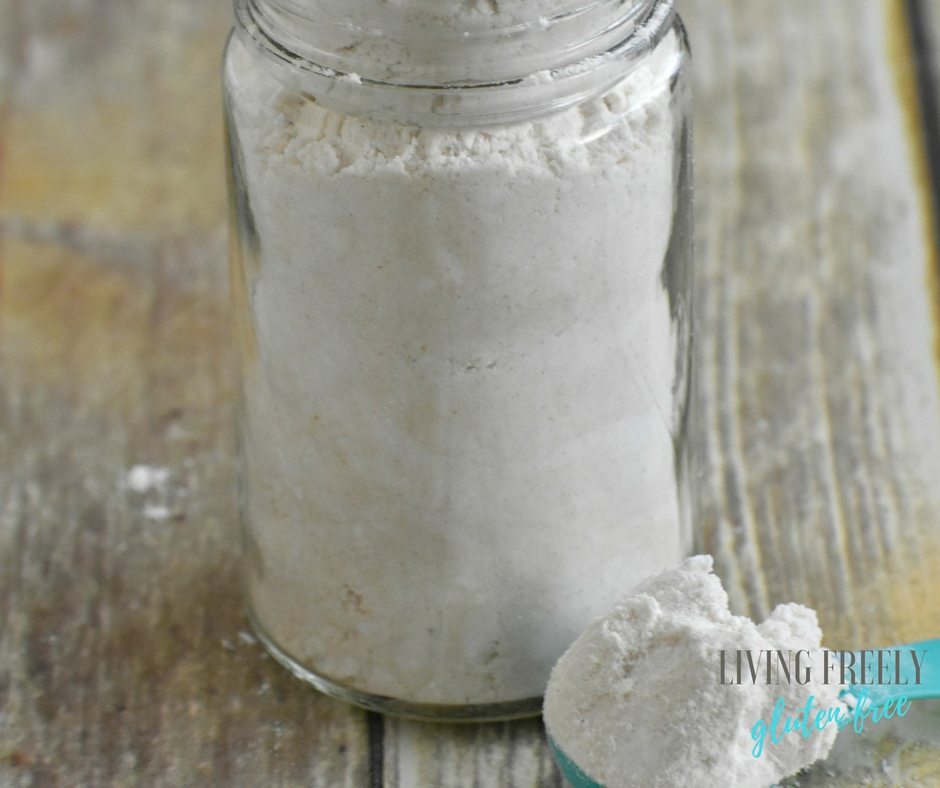
You can make this blend with or without xanthan gum. I originally preferred leaving it out so I could add the binder based on the individual recipe, but if you want an all-purpose blend that’s ready to grab and bake with, you can add the xanthan gum directly to the flour.

Why You’ll Love This Gluten Free Flour Blend
Easy to keep on hand: Make six cups at once and store it in an airtight container in your pantry.
Only three flours and starches: The base is made with brown rice flour, tapioca starch and potato starch.
Ready in 5 minutes: Measure everything into a bowl, mix and store.
Versatile: I’ve used this blend in cakes, cookies, muffins, breads, pie crust and even gravy.
Make it with or without xanthan gum: Leave it out when you want control over the binder in individual recipes, or add it directly to the blend for convenience.
Why I Started Making My Own Gluten-Free Flour
When I first went gluten-free, I tried several premade flour blends. My results changed depending on the blend I used, and the cost added up quickly because I bake frequently.
I started experimenting with different combinations of gluten-free flour and starch until I found the balance that worked consistently in my recipes. This brown rice flour blend became the one I reached for again and again.
I’ve used it for everything from pancakes and muffins to cookies, cakes and pie crust. Keeping a large batch in the pantry means I don’t have to combine several different flours every time I want to bake—which is helpful because gluten-free baking already gives us enough to think about.
What Is Gluten-Free All-Purpose Flour?
Traditional all-purpose flour is made from wheat and naturally contains gluten. A gluten-free all-purpose flour blend combines gluten-free whole-grain flour with starches to help recreate the structure and texture normally provided by wheat flour.
This blend uses brown rice flour as its primary flour. Tapioca starch and potato starch lighten the blend and help produce softer, less dense baked goods.
A binder such as xanthan gum is sometimes used to provide additional structure. However, not every gluten-free recipe needs the same amount of binder, which is why the xanthan gum in this blend is optional.
What’s in This Gluten Free All Purpose Flour Blend?
Xanthan gum (optional): You can add xanthan gum directly to the flour blend or leave it out and add it to individual recipes as needed.
You only need three ingredients to make the base of this homemade gluten free flour blend:
Brown rice flour: This makes up the majority of the blend. I use Bob’s Red Mill Gluten Free Brown Rice Flour and have had the best results with it. You can also use white rice flour, or use 2 cups brown rice flour and 2 cups white rice flour.
Tapioca starch: Adds starch to the rice flour-based blend and helps create the texture we want in gluten-free baked goods. Tapioca flour and tapioca starch are the same thing.
Potato starch: The second starch in the blend. If you can’t use potato starch, I’ve successfully recommended replacing it with tapioca starch, arrowroot starch or cornstarch.
Do I Need Xanthan Gum in Gluten Free Flour?
Xanthan gum is optional in this gluten free flour blend.
If you want to keep your flour blend gum-free, simply leave it out and add xanthan gum to individual recipes when needed. My general rule is 1 teaspoon of xanthan gum for every 2 cups of gluten free flour.
If you’d rather have the xanthan gum already mixed into your flour, add 3 teaspoons of xanthan gum to this entire recipe. The finished recipe makes 6 cups of gluten free flour blend.
If your flour blend already contains xanthan gum, do not add additional xanthan gum when a recipe calls for it.
How to Make Gluten Free All Purpose Flour
This recipe makes 6 cups of gluten free all purpose flour.
Making your own gluten free flour blend takes about 5 minutes.
- Add the brown rice flour, tapioca starch and potato starch to a large mixing bowl.
- If you’re including xanthan gum in your blend, add it now.
- Whisk everything together thoroughly until evenly combined.
- Transfer the flour to an airtight container and store it in your pantry.
How to Measure Gluten-Free Flour
For the most consistent results, use the spoon-and-level method unless the recipe provides weight measurements.
Stir the flour blend, lightly spoon it into the measuring cup and level the top with a straight edge. Do not pack the flour into the cup.
Scooping flour directly from the container can compress it and cause you to use more flour than the recipe requires. Too much flour may result in dry, dense or crumbly baked goods.
Can This Be Used as a Cup-for-Cup Flour?
This blend works as the all-purpose flour in my recipes that were developed and tested with it.
I cannot guarantee that it will replace wheat flour cup for cup in every conventional recipe. Gluten-free flour absorbs liquid differently, and recipes originally developed with wheat may require additional adjustments to the flour, liquid, fat, eggs or binder.
If you are new to gluten-free baking, begin with recipes specifically developed to be gluten-free. Once you are familiar with how the blend behaves, you can experiment with adapting other recipes.
Starch Substitutions
For the most reliable results, make the blend with tapioca starch and potato starch as written.
If you cannot use potato starch, you can experiment with replacing it with additional tapioca starch, arrowroot starch or cornstarch. Substituting a starch may change the texture, browning or moisture level of the finished recipe, so I cannot guarantee identical results.
Do not substitute potato flour for potato starch. Potato flour behaves differently and will significantly change the blend.
How to Store Gluten-Free Flour
Transfer the flour blend to a clean, airtight container and store it in a cool, dry pantry for up to six weeks.
Label the container with the date and note whether xanthan gum was included. Stir or whisk the blend before each use to redistribute the flour and starches.
For longer storage, you can keep the blend in the refrigerator or freezer. Allow refrigerated or frozen flour to return to room temperature before using it in a recipe.
No. Xanthan gum is optional in this blend.
Add three teaspoons to the complete six-cup batch if you want the convenience of having it incorporated. Otherwise, leave it out and add xanthan gum or another binder according to the individual recipe.
Add three teaspoons of xanthan gum to the complete six-cup flour blend.
This is based on a general ratio of approximately one teaspoon of xanthan gum for every two cups of flour blend. Individual recipes may require a different amount, which is why you may prefer to leave it out.
Yes. White rice flour can be substituted for the brown rice flour, although it may produce slightly different results.
You can also use two cups of brown rice flour and two cups of white rice flour in the blend.
Yes. In most cases, tapioca starch and tapioca flour are two names for the same ingredient.
No. Potato starch and potato flour are different ingredients. Use potato starch for this flour blend.
You can experiment with additional tapioca starch, arrowroot starch or cornstarch, but the finished texture may change. I recommend preparing the original blend as written when possible
Yes. I have used this blend to make gluten-free gravy.
No. Brown rice flour is a grain. Use my grain-free all-purpose flour blend if you need a grain-free option. I do have a grain-free all purpose flour recipe, if you are looking for that option.
Better Batter is the premade gluten-free flour I have tested and recommend when you don’t want to make your own blend.
You can use code livingfreelygf for 30% off at BetterBatter.com. Use code livingfreelygf10 for 10% off sale items.
Recipes to Make With This Flour Blend
Put your homemade gluten-free flour to work in these reader-favorite recipes:
- Gluten-Free Dairy-Free Vanilla Cake
- Gluten-Free Funfetti Cake
- Gluten-Free Coffee Cake
- Gluten-Free Chocolate Cake
- Gluten-Free Banana Bread
- Gluten-Free French Bread
More Gluten-Free Recipes in My Cookbook
My signed cookbook, 101 Incredible Gluten Free Recipes, is filled with approachable gluten-free and dairy-free recipes for everyday meals, baking and celebrations.
Use code LIVEFREELY for 30% off. Your signed copy is just $17.50 total, including tax and shipping.
Want to Save This Recipe?
Enter your email & I’ll send it to your inbox. Plus, get great new recipes from me every week!
By submitting this form, you consent to receive emails from Living Freely Gluten Free.
Ingredients
- 4 cups brown rice flour
- 1 cup tapioca starch
- 1 cup potato starch
- 3 teaspoons xanthan gum optional
Instructions
- Add the brown rice flour, tapioca starch and potato starch to a large mixing bowl.
- If desired, add the xanthan gum.
- Whisk thoroughly until all the ingredients are evenly combined.
- Transfer the flour blend to an airtight container. Label the container to indicate whether the blend contains xanthan gum.
- Store in a cool, dry pantry for up to six weeks. Stir or whisk the blend before measuring it for a recipe.
Notes
- Xanthan gum is optional. Add three teaspoons to the complete six-cup batch for convenience, or leave it out and add a binder according to the individual recipe.
- If the blend already contains xanthan gum, do not add more when a recipe calls for it unless specifically instructed.
- White rice flour can be used in place of brown rice flour. You can also use two cups of brown rice flour and two cups of white rice flour.
- Tapioca starch and tapioca flour are generally the same ingredient.
- Potato starch and potato flour are not interchangeable. Use potato starch in this blend.
- For the best results, use this blend in recipes specifically developed or tested with gluten-free all-purpose flour.
- Stir or whisk the blend before each use because the ingredients can settle during storage.
Nutrition

Air Fryer Buffalo Cauliflower Wings (Gluten Free & Vegan)
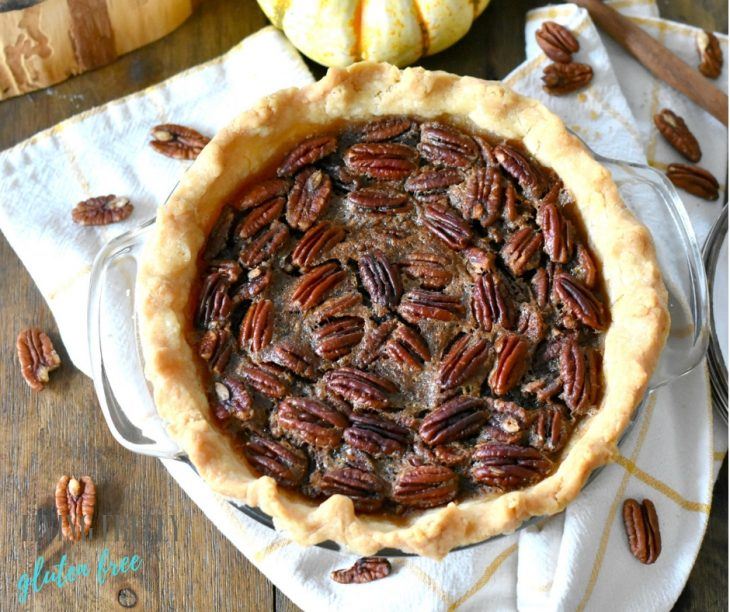
Paleo Pecan Pie (Gluten Free & Corn Syrup Free)

Easy Vegan Chili with Lentils and Beans (Gluten Free)
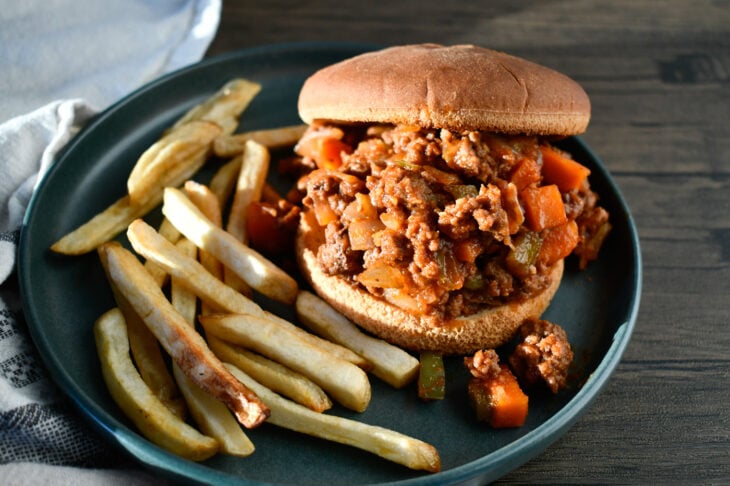
Gluten Free Sloppy Joes (Easy Homemade Sauce)
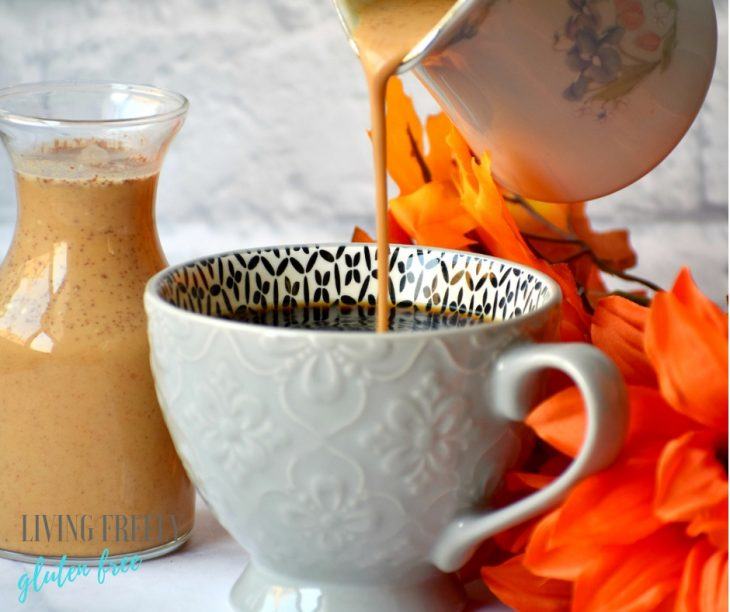
Vegan Pumpkin Spice Creamer (Dairy Free)
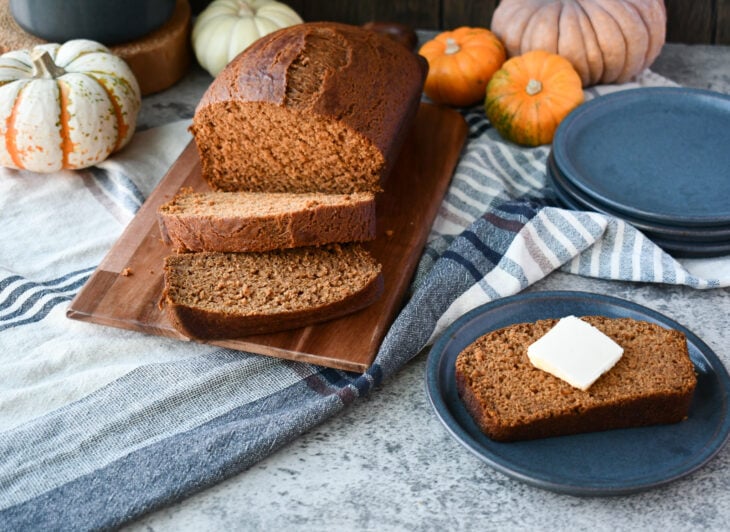
Gluten Free Dairy Free Pumpkin Bread (Easy & Fluffy)
This was originally posted in 2014. It was updated and re-posted in September 2026.


Any recommendations for the brown rice flour? Superfine? Brand? TIA
I use Bobs Red Mill Gluten Free Brown Rice Flour.
How can I make this grain free?
Hi Gerri,
I have a grain free all purpose flour blend recipe. Here it is https://www.livingfreelyglutenfree.com/grain-free-all-purpose-flour/
Thank you for all that you do.
Thank you Kim. I really appreciate that! 🙂
I can’t use potato anything. Is there a substitute that won’t totally change the texture?
You can use tapioca starch, arrowroot, or corn starch and it will not change the texture.
Hi there! Just a question on the white rice flour. If using it instead of the brown rice flour, does it change the texture at all? I have combined both of these flours in a few blends but never by themselve. I have used up so much gf flour trying for the best texture. Oftentimes my cakes come out heavy and almost gummy. If you have any suggestions to avoid that I would sure appreciate them. Thanks for sharing your recipes!!
Hi Charlene,
The white rice flour is a bit more starchy. Are you using my cake recipes, or adapting regular recipes to be gluten free?
Hi, my daughter is allergic to peanuts & tree nuts and all or most of the Bob’s Red Mill products are made in a facility/equipment that has these. Are there any other brands that you would recommend to use for the potato starch & the brown rice flour that are called for in your flour mix? Have you ever tried using the King Arthur Gluten Free All-Purpose Mix?
Also, for the cake recipe, it states that 8″ round pans can be used…..would two 8″ pans be required for one recipe? Thank you.
Hi Elizabeth, yes 2 8 inch rounds work well for the cake recipe. I have not used King Arthur, but I do have readers that use it and like it. Another brand of flour that I like is Anthony’s. I am not sure about their facility with nuts, but I have used it many times with success. I hope that helps.
Hey, what’s the measurements in grams as I’m from the UK and our cup measurements are different than the US? Thank you.
I don’t know them off of the top of my head. However, my cookbook that is coming out next year will have the gram measurements in them.
Can I make my own brown rice flour? I have a Nutrimill.
Sure! You can even use a white rice flour if you prefer a specific brand. I need one of those!
Have you found a good gluten free blend to make cream gravy?
I have used this blend to make gravy. In fact there is a biscuits and gravy recipe in my upcoming cookbook and this is the blend I used.
Have you used Better Batter All purpose flour? If you have, how does this recipe compare to it?So far, I find it the best GF flour. It’s just so expensive and hard to find in Canada right now.
I have tried the new gum free line and so far it is working really great for my recipes. My flour blend has worked better than any other store bought blend I have tried.
Does it matter what kind of rice you use? I have a 20lb bag of Jasmine and a grain grinder.:)
I don’t think it matters. Whatever you have should be fine 🙂
When purchasing rice flour, there is the option for glutenous rice flour which is, ironically, gluten fee. The processing is different, I am told. Which rice flour option would be better!
The only rice flour I would use is regular brown rice flour.
Thank you Jennifer for all of your wonderful recipes. I’m a bit confused regarding the addition of xanthan gum to your GF AP flour blend. One direction says to add 3 teaspoons of xanthan gum, as an option, to the recipe which contains 4 cups of flour, and then another direction in the same post called “the rule of thumb” says to add 1 teaspoon xanthan gum for every 2 cups of flour.
How much xanthan gum should I add to your GF AP flour blend 4 cup flour recipe, 3 teaspoons or 2 teaspoons?
Thanks! I’m baking my daughters’ May wedding cake. Oh, one more questions… to get a lighter colored cake (more white) should I use white rice flour rather than the brown rice flour?
Hi Kim! Once the flour and starch are combined, you will have 6 cups of all purpose flour, so add the 3 tsp of xanthan gum. Even with the brown rice flour, the ap flour is white once combined, but you can use white rice flour in place of the brown rice flour. You can even do half and half, 2 cups brown rice flour and 2 cups white rice flour. Please let em know if you have any other questions and congratulations on your daughter’s wedding.
is tapioca flour the same as tapioca starch?
Yes!
Can you use half brown rice flour and half white rice flour?
Yes!